Ligand binding to fibrinogen influences its structure and function

Authors

  • Nikola Gligorijević Department for Metabolism, Institute for the Application of Nuclear Energy, University of Belgrade, Belgrade, Serbia
  • Simeon Minić Center of Excellence for Molecular Food Sciences and Department of Biochemistry, University of Belgrade – Faculty of Chemistry, Belgrade, Serbia
  • Mirjana Radomirović Center of Excellence for Molecular Food Sciences and Department of Biochemistry, University of Belgrade – Faculty of Chemistry, Belgrade, Serbia
  • Steva Lević University of Belgrade – Faculty of Agriculture, Belgrade, Serbia
  • Milan Nikolić Center of Excellence for Molecular Food Sciences and Department of Biochemistry, University of Belgrade – Faculty of Chemistry, Belgrade, Serbia
  • TanjaĆirković Veličković Ćirković Veličković Center of Excellence for Molecular Food Sciences and Department of Biochemistry, University of Belgrade – Faculty of Chemistry, Belgrade, Serbia; Serbian Academy of Sciences and Arts, Belgrade, Serbia; Faculty of Bioscience Engineering, Ghent University, 9000 Ghent, Belgium; Global Campus, Ghent University, Yeonsu-gu, Incheon 406-840, Korea
  • Olgica Nedić Department for Metabolism, Institute for the Application of Nuclear Energy, University of Belgrade, Belgrade, Serbia

Keywords:

bilirubin, dihydrolipoic acid, fibrinogen, protein function, protein-ligand interaction, protein structure, resveratrol

Abstract

Fibrinogen is a plasma protein that is highly susceptible to oxidation. Because of this chemical modification, fibrinogen acquires thrombogenic characteristics under different pathophysiological conditions. Increased carbonyl content and reduced porosity impair the degradation of formed fibrin mediated by plasmin. Fibrinogen is capable of interacting with many proteins, ions, and small molecules. These interactions can modify the functions of this protein. The discovery of new binding partners that may protect fibrinogen from harmful oxidation and, thus, preserve its normal function is essential. Some of the newly detected interactions between fibrinogen and small, natural bioactive molecules, together with the influence of these interactions on the structure and function of fibrinogen, will be presented in this text.
Published

2021-09-20

How to Cite

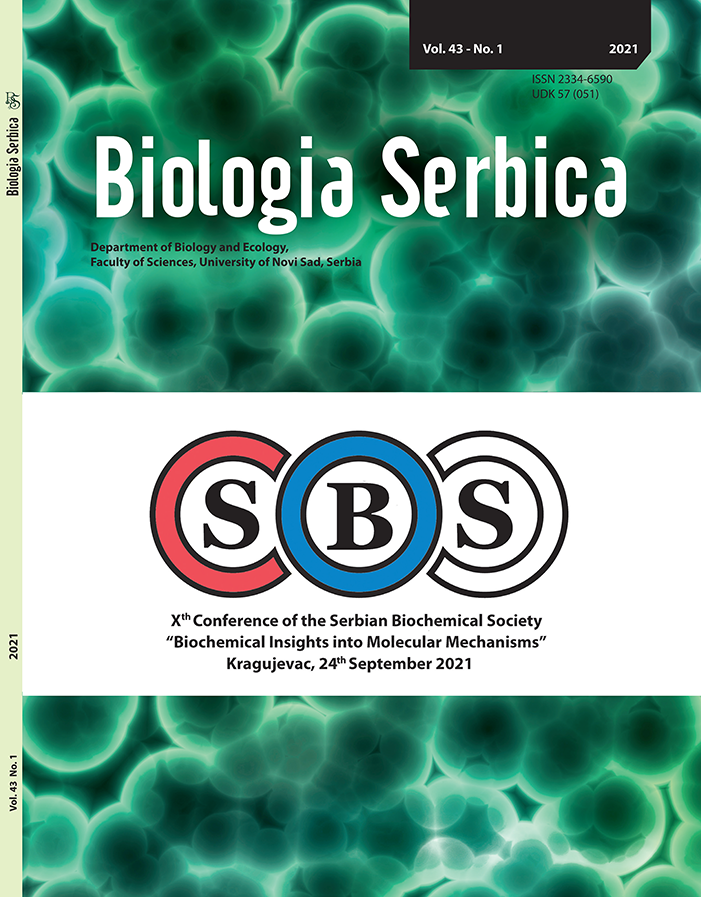
Gligorijević, N., Minić, S., Radomirović, M., Lević, S., Nikolić, M., Ćirković Veličković, T. V., & Nedić, O. (2021). Ligand binding to fibrinogen influences its structure and function. Biologia Serbica, 43(1). Retrieved from https://journal.pmf.uns.ac.rs/index.php/biologiaserbica/article/view/66

Issue

Section

Review paper